
- All
- Product Name
- Product Keyword
- Product Model
- Product Summary
- Product Description
- Multi Field Search
Views: 0 Author: Site Editor Publish Time: 2025-11-11 Origin: Site
Joining Split Flexible Corrugated Pipe can be tricky. Split Flexible Corrugated Pipe makes it easier. It protects cables and allows quick access.In this article, you will learn how to join split flexible Split Flexible Corrugated Pipe. We cover step-by-step methods, tools, and best practices.You will discover practical tips to ensure safe, durable, and efficient connections for all wiring projects.
A Split Flexible Corrugated Pipe is designed with a slit along its length, allowing cables to be inserted without threading them through the entire run. It differs from standard Split Flexible Corrugated Pipe, which typically requires pre-feeding wires before installation. They are widely used in electrical, data, and automation systems.
This conduit type provides superior flexibility, making it ideal for complex or confined spaces. It reduces labor, prevents cable damage, and allows easy upgrades or maintenance.
Split Flexible Corrugated Pipe comes in plastic (PVC, PE) and metal variants. Plastic options are lightweight, corrosion-resistant, and cost-effective, whereas metal options provide higher mechanical protection. Typical diameters range from 16mm to 50mm, with wall thickness varying depending on mechanical stress and environmental exposure.
For residential use, smaller diameters suffice, while industrial applications may require thicker walls for added protection. Choosing the right material and size ensures longevity and prevents frequent replacements.
Using split conduit improves accessibility, reduces installation time, and ensures reliable protection. It allows technicians to add or remove cables without disassembling the entire conduit system. Split Flexible Corrugated Pipe also enhances protection against moisture, abrasion, and physical stress.
They are particularly useful in retrofit projects, where existing conduits are already in place. The convenience of quick installation translates into cost savings and improved project timelines.
To join conduits efficiently, gather proper tools. Pipe cutters provide precise cuts, deburring tools smooth edges, and pliers help manipulate fittings. Measuring tape and markers ensure accurate alignment. Optional tools like heat shrink tubing add extra protection to exposed cable ends.
Using the right tools prevents damage and ensures a professional finish. Always check tool condition before starting installation to maintain consistent quality.
Several connectors suit Split Flexible Corrugated Pipe, including push-fit and threaded couplings. Push-fit fittings allow fast assembly, while threaded couplings provide stronger, more secure joints. It is essential to ensure a watertight and durable connection to prevent cable exposure.
Common Coupling Types and Applications
Coupling Type | Best Use Case | Advantages |
Push-Fit Coupling | Quick installations, retrofits | Easy, no tools required |
Threaded Coupling | Industrial, high-stress environments | Secure, durable, water-resistant |
Adhesive-Sealed | Outdoor or moisture-prone areas | Maximum sealing, long-term use |
Safety is paramount. Gloves and eye protection prevent injuries while handling sharp tools and conduit edges. Workspace organization reduces trip hazards and ensures tools are accessible. Handle Split Flexible Corrugated Pipe carefully to avoid kinking or tearing.
Begin by accurately measuring the required length of Split Flexible Corrugated Pipe to ensure a precise fit for your installation. Use a sharp pipe cutter to make clean, straight cuts, then deburr the edges carefully to prevent cable abrasion or snagging during installation. Check the alignment of both conduit ends to avoid uneven joints, which could create gaps or stress points when cables are inserted. Taking time during this preparation stage not only prevents installation errors but also ensures a smooth workflow and reduces material waste, improving efficiency on both small and large-scale projects.
Slide the split conduit over existing cables or newly run wires, making sure that all sections align properly for a flush connection. Secure the joints with appropriate couplings or clips, ensuring that the split edges close neatly without pinching or compressing cables. Following the step by step join Split Flexible Corrugated Pipe with coupling method guarantees a robust connection that maintains flexibility for future adjustments or maintenance. Ensuring proper alignment at this stage prevents strain on cables and improves the overall durability of the installation, even in high-traffic or vibration-prone areas.
After connecting, apply adhesives, specialized tapes, or sealants to seal the joint against moisture, dust, and other environmental contaminants. While sealing, maintain the natural flexibility of Split Flexible Corrugated Pipe to avoid creating sharp bends or kinks that could compromise cable integrity. Verify the stability of the joint before energizing circuits to ensure it can withstand mechanical stress and environmental exposure. Proper sealing not only prolongs the lifespan of both conduit and cables but also prevents water ingress or dust accumulation that could lead to electrical faults over time.
Once the joint is sealed, conduct a thorough inspection for sharp edges, loose couplings, misalignment, or gaps. Test the flexibility by gently moving the conduit and checking cable movement inside the pipe. Routine inspections should also monitor for wear or deformation caused by thermal expansion or mechanical stress. Performing these checks ensures long-term durability and reliability, reducing the need for frequent maintenance or emergency repairs. Maintaining an inspection log can help track the performance of Split Flexible Corrugated Pipe installations over time.
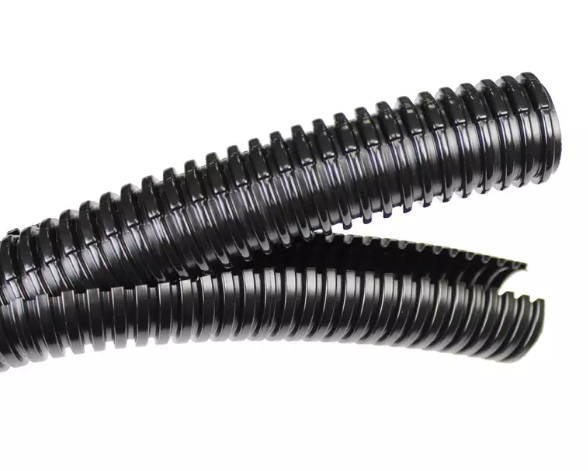
Installing conduits in tight or confined spaces requires careful planning and manipulation. Bending and positioning Split Flexible Corrugated Pipe without creating kinks can be achieved using specialized bending tools and flexible clips. These tools allow technicians to maneuver the conduit precisely while maintaining the structural integrity of the pipe. Using split conduit in confined areas enables cable addition or removal without disassembling large sections, making it ideal for retrofits or complex electrical layouts.
Uneven or damaged sections of conduit can disrupt cable routing and reduce system reliability. Short conduit splices or replacement segments allow repair without removing entire runs. Split Flexible Corrugated Pipe is especially useful for retrofits because it allows access to cables without dismantling existing installations. Ensuring that damaged areas are properly aligned and secured maintains both mechanical and electrical integrity, reducing long-term maintenance costs.
Adhering to local electrical codes is essential for safe and compliant installations. Split Flexible Corrugated Pipe can simplify compliance by providing protective channels that maintain proper spacing, insulation, and separation of cables. Documenting all conduit runs ensures traceability, easier inspections, and smooth future upgrades. Using compliant installation techniques minimizes risk, enhances safety, and reduces liability for contractors and B2B operators.
Mechanical couplings provide strong, durable connections suitable for high-stress or industrial environments, though they require precise installation and tools. Push-fit connections are faster and convenient, ideal for retrofits and projects requiring minimal disruption. Split Flexible Corrugated Pipe works well with both methods, offering flexibility for multiple applications. Comparing these options helps contractors choose the most efficient and reliable method based on the specific project requirements and environmental conditions.
Split Flexible Corrugated Pipe reduces installation time and allows easier access to cables compared with standard Split Flexible Corrugated Pipe. While standard conduits may provide higher mechanical strength, they require threading cables through pre-installed sections. Choosing between the two depends on factors like accessibility, maintenance frequency, and environmental exposure. Split conduits are particularly advantageous in retrofit scenarios and complex cable layouts.
Temporary fittings are ideal for testing, prototyping, or short-term projects, offering quick removal and adjustment. Permanent connections, usually achieved with threaded couplings or adhesives, provide long-term stability and protection. Evaluating project needs carefully before selecting temporary or permanent methods ensures optimized efficiency, safety, and long-term reliability.
Plan the route to minimize bends and friction points, which reduces installation difficulty and cable stress. Pre-measuring conduit lengths prevents waste, simplifies alignment, and ensures seamless joining of multiple sections. Efficient planning speeds up installation and reduces potential errors, especially in large or multi-level projects.
Split conduits help separate different cable types while maintaining a neat and organized system. Bundling cables inside Split Flexible Corrugated Pipe ensures cables do not overlap unnecessarily, reducing wear and making future maintenance easier. Organized installations improve troubleshooting efficiency and reduce downtime.
Regular inspection of joints is crucial to identify wear, misalignment, or displacement. Split Flexible Corrugated Pipe allows easy replacement or rerouting of cables without dismantling entire sections. Proper maintenance routines extend the life of both cables and conduits, ensuring system reliability.
Successfully joining Split Flexible Corrugated Pipe needs careful preparation and proper tools. Zhonghe’s Split Flexible Corrugated Pipe simplifies installation and protects cables. It allows easy maintenance and ensures durable connections. Using Zhonghe products improves efficiency and reliability in all wiring projects.
A: A Split Flexible Corrugated Pipe is a conduit with a slit along its length, allowing easy cable insertion. It protects cables from abrasion and moisture while simplifying installation.
A: To join split flexible Split Flexible Corrugated Pipe, measure and cut accurately, align the sections, and secure them with couplings or clips. Follow step by step join Split Flexible Corrugated Pipe with coupling for durable connections.
A: Essential tools include pipe cutters, deburring tools, pliers, and measuring tape. Heat shrink tubing can add protection. Using the right tools ensures smooth, efficient installation of Split Flexible Corrugated Pipe.
A: Slide the conduit over cables and attach it to the junction box using compatible couplings. Ensure the Split Flexible Corrugated Pipe aligns properly and is secured to prevent gaps or kinks.
A: Split Flexible Corrugated Pipe allows easier cable access, faster installation, and simpler maintenance. Standard conduit requires pre-feeding wires and can be less flexible in retrofits.
A: Use flexible conduit clips and bending tools to maneuver Split Flexible Corrugated Pipe without kinks. Pre-planning the route minimizes bends and friction for smooth cable installation.
A: Split Flexible Corrugated Pipe may cost slightly more upfront but saves labor and time. Its durability and easy maintenance reduce long-term installation and replacement costs.
A: Check for gaps, loose fittings, or sharp edges regularly. Ensure cables move freely inside Split Flexible Corrugated Pipe. Routine maintenance prevents damage and extends conduit lifespan.
A: Common mistakes include misalignment, over-tightening couplings, and neglecting edge deburring. Following best tools for joining Split Flexible Corrugated Pipe pipe and step-by-step methods prevents these issues.
A: Yes, it can be easily opened to add or remove cables. Using split conduit allows efficient retrofits without removing existing installations, saving time and effort.


