- All
- Product Name
- Product Keyword
- Product Model
- Product Summary
- Product Description
- Multi Field Search
Views: 0 Author: Site Editor Publish Time: 2026-06-16 Origin: Site
Industrial and infrastructure cable failures carry massive stakes. Unexpected downtime halts critical operations instantly. Safety hazards and severe replacement costs quickly follow a compromised line. You cannot afford arbitrary equipment failures.
Standard commercial wiring thrives in controlled spaces. However, subterranean lines, chemical plants, and heavy manufacturing floors demand far superior defenses. These harsh environments mercilessly attack unprotected power and data lines. Extreme temperatures, crushing weights, and corrosive chemicals destroy standard jackets within months.
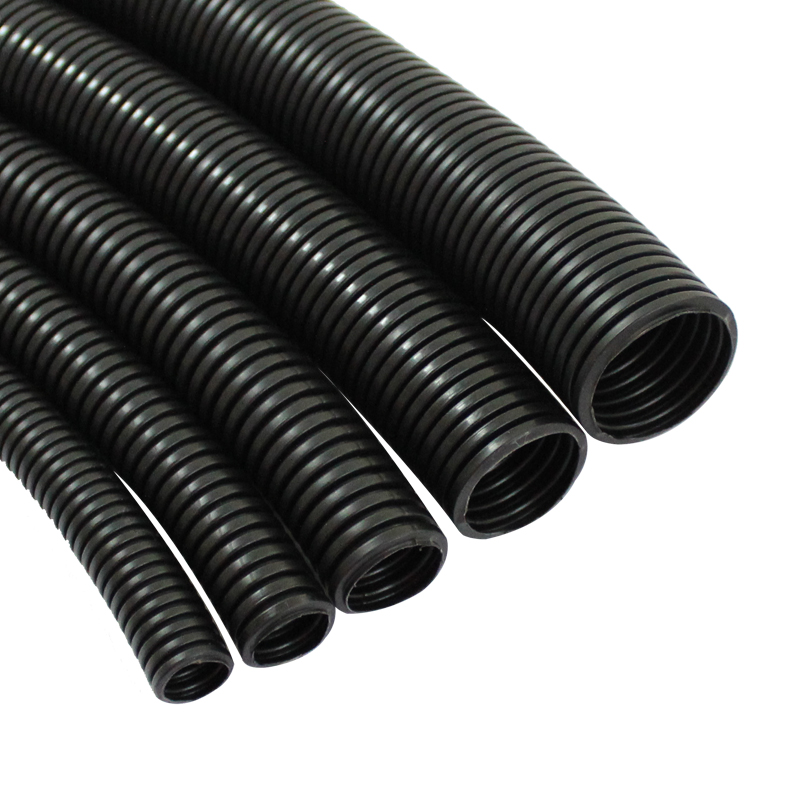
You need a robust defense mechanism to ensure continuous operation. Corrugated Pipe delivers the optimal balance of mechanical protection and routing flexibility. Compared to rigid alternatives, it guarantees long-term asset longevity under extreme stress. We will explore environmental stressors, compare material performance, and define crucial installation standards below.
Assessing environmental stressors (mechanical, chemical, thermal) is the mandatory first step before specifying cable protection.
Corrugated pipe offers a higher lifecycle ROI than rigid alternatives due to faster installation, vibration tolerance, and targeted material resilience.
Complete system integrity relies equally on the conduit material and the specification of compatible, IP-rated connectors.
Proper installation—including adherence to minimum bend radii and strict cable fill ratios—is critical to preventing heat buildup and jacket abrasion.
Evaluating a Cable Conduit begins with mapping your specific operational space. You cannot guess environmental conditions. Industry professionals often rely on frameworks similar to the MICE model. MICE stands for Mechanical, Ingress, Climatic, and Electromagnetic conditions. You must audit your site using these exact categories. This framing transforms vague hazards into measurable metrics.
Mechanical Impact & Crush Risks: Heavy machinery zones present constant dangers. Forklifts drop heavy loads. Continuous vibration from manufacturing equipment shakes lines constantly. Direct-burial applications face soil subsidence. Shifting dirt creates massive shear forces across underground lines.
Chemical & Corrosive Exposure: Industrial settings house aggressive substances. Oils and solvents degrade standard plastics. Coastal or marine environments introduce saline moisture. Saline rapidly corrodes unprotected metals. Food processing plants use harsh industrial cleaning agents daily.
Extreme Thermal & UV Conditions: Temperature swings destroy weak materials. Sub-zero environments cause severe brittleness. Brittle plastics shatter under minimal impact. High-heat degradation melts inferior polymers. Prolonged direct sunlight exposure introduces ultraviolet (UV) radiation. UV rays break down unrated molecular bonds over time.
You must match the identified severity to the right base material. Never apply a one-size-fits-all solution. Consider an automotive robotics arm. It experiences relentless movement and vibration. You should specify Polyamide (Nylon) here. Nylon handles continuous flexing beautifully. Conversely, consider an underground telecommunications line. It remains static but faces moisture and soil pressure. High-Density Polyethylene (HDPE) provides superior underground longevity.
Objective comparisons reveal clear operational advantages. Engineers traditionally choose between unarmored direct-burial cables, smooth PVC, and rigid metal conduits (RMC). Each legacy method carries specific drawbacks. Unarmored cables lack physical defense entirely. Smooth PVC snaps under dynamic bending. RMC installation consumes massive labor hours.
Corrugated geometry provides a unique engineering advantage. The ridged structure absorbs mechanical stress efficiently. It distributes crush loads across multiple peaks. This allows for dynamic routing around complex machinery. It resists vibration fatigue exceptionally well. Rigid metal conduits suffer from micro-fractures under constant vibration. Rigid systems ultimately crack. Flexible conduits simply move alongside the vibration.
Deployment speed directly impacts your project budget. Lightweight construction reduces labor requirements significantly. A single technician can carry a large coil easily. Rigid metal requires multiple workers for transport. Metal also demands specialized threading tools. Complex routing scenarios slow down RMC installations. Flexible routing bypasses obstacles instantly. You save days of deployment time.
Engineered polymers offer inherent chemical advantages over metal. Highly acidic environments eat through steel enclosures. Alkaline solutions and moisture-rich environments trigger rust rapidly. Polymeric conduits ignore these corrosive elements. They never rust. They do not require secondary protective coatings. They maintain structural integrity indefinitely in wet locations.
We must acknowledge specific limitations realistically. Rigid metal offers superior extreme-crush resistance. A direct hit from a multi-ton vehicle favors steel. However, most facilities rarely experience catastrophic, direct-metal impacts. Flexible options provide the most versatile defense. They form the most cost-effective barrier for 90% of dynamic applications. They excel in chemical-heavy environments where metal fails.
Protection Type | Flexibility | Corrosion Resistance | Installation Speed | Best Use Case |
|---|---|---|---|---|
Rigid Metal Conduit (RMC) | Low | Poor (without coating) | Slow | Extreme impact zones |
Smooth PVC | Moderate | Good | Moderate | Light commercial walls |
Direct Burial Cable | High | Moderate | Fast | Temporary or low-risk buried lines |
Corrugated Conduit | Very High | Excellent | Very Fast | Dynamic machinery, chemical zones, complex routing |
Selecting the exact material determines your operational success. Plastics vary wildly in their chemical compositions. You cannot select products based on diameter alone. Evaluate materials, ingress ratings, and safety standards rigorously.
HDPE (High-Density Polyethylene): Features high impact strength. Acts as an excellent moisture barrier. Represents the best choice for direct burial. Excels in civil infrastructure projects.
Polyamide (PA / Nylon): Delivers superior chemical resistance. Withstands extreme temperature tolerances. Operates perfectly in robotics. Dominates railway and automotive applications.
Polypropylene (PP): Serves as a reliable, cost-effective baseline. Handles moderate chemical exposure. Withstands moderate temperature swings. Works well for indoor industrial routing.
Required certifications validate product authoritativeness. Never purchase uncertified infrastructure materials. Look for UL, CSA, and CE marks. These marks prove rigorous third-party testing.
Evaluate your ingress risks carefully. IP67 ratings protect against temporary submersion. IP68 ratings allow continuous underwater operation. IP69K ratings defend against high-pressure washdowns. Food and beverage facilities demand IP69K ratings constantly. Select the rating matching your absolute worst-case scenario.
Fire safety protocols dictate material choices indoors. You must understand Low Smoke Zero Halogen (LSZH) requirements. Standard plastics release toxic halogen gases during combustion. These gases obscure escape routes. They poison trapped personnel rapidly. Confined spaces mandate LSZH materials strictly. Public infrastructure projects require them universally. Ensure your selection meets local fire code regulations.
Many engineers specify excellent pipe but neglect the fittings. This creates an immediate operational hazard.
Harsh environment protection fails most often at connection points. The pipe itself rarely cracks first. Moisture enters through poorly sealed junctions. Dust infiltrates loose terminal ends. You must secure the entire routing pathway. Complete system integrity relies on premium connectors.
Select fittings based on your routing geometry. Straight connectors serve linear runs perfectly. 90-degree connectors handle sharp machinery corners. T-connectors split lines smoothly. Always choose fittings constructed from the identical base material. Mismatched materials expand at different thermal rates. Thermal mismatch breaks waterproof seals over time.
Different environments require different locking designs. Standard snap-on fittings work well for dry areas. They snap together rapidly. They save massive installation time. High-pressure washdown zones demand threaded connectors. Gasket-sealed fittings lock out pressurized moisture. O-rings create impermeable barriers against chemicals and water.
Proper connectors prevent violent cable pull-outs. Machinery motion yanks on internal wires constantly. Good fittings clamp onto the outer ridges securely. They maintain the structural bend radius at termination points. This prevents wire jackets from rubbing against sharp electrical box edges. It ensures overall system longevity.
A perfect product fails under poor installation practices. Field technicians must follow strict deployment protocols. Electrical codes govern these safety parameters.
Electrical codes establish strict sizing guidelines. The National Electrical Code (NEC) standardizes a maximum 40% fill ratio for multiple wires. You must leave 60% of the internal space empty.
Overfilling creates catastrophic risks. Crammed wires create massive friction during pulling. This friction tears wire jackets easily. More importantly, bundled wires generate intense thermal loads. They cannot dissipate heat effectively inside a stuffed tube. Overheating melts wire insulation and sparks electrical fires.
Underground installations require careful earthwork. Standard depth requirements prevent surface load crushing. You usually bury lines at least 18 to 24 inches deep. Heavy vehicle traffic zones require even deeper trenches.
Bedding and backfill practices matter immensely. Never dump rocky soil directly onto the line. Sharp rocks create point-loading stress. Point-loading slowly pierces the plastic over decades. Always lay a soft sand bedding first. Surround the infrastructure with clean, rock-free backfill.
Material stress cracking occurs when you bend plastics too sharply. Establish and respect minimum bend radii. Manufacturers publish static and dynamic bend radius limits. Static runs remain permanently fixed. Dynamic runs bend back and forth repeatedly. Never exceed these published curvature limits. Forcing a tight corner guarantees premature material snapping.
We see common field failures repeatedly. Technicians sometimes use indoor-rated pipe outdoors. UV rays destroy these indoor conduits within months. Always verify UV resistance for exterior jobs.
Improper cutting tools ruin perfect installations. Using a jagged hacksaw leaves sharp internal burrs. These burrs slice expensive wire jackets during the pull. Always use proper cutting shears. Clean cuts ensure a perfectly flush fit into the O-ring seals.
Your facility requires resilient, adaptable infrastructure. Success depends entirely on matching the material to the environment. You must size your pathways correctly to prevent thermal overload. Utilizing complete, sealed systems prevents moisture ingress at the weakest points.
When selecting your materials, demand rigorous proof. Ask procurement teams to secure material data sheets. Review chemical resistance charts against your specific factory fluids. Request physical sample testing for your specific use cases before ordering bulk quantities.
Do not leave critical infrastructure to chance. Consult with a technical specialist regarding your upcoming installation. Request a product sample to test flexibility firsthand. Download a comprehensive specification guide today to finalize your Bill of Materials accurately.
A: High-quality engineered polymers boast exceptional longevity. When installed correctly below the frost line, HDPE materials typically last 50+ years. Soil chemistry, backfill quality, and traffic loads influence this duration slightly. Proper sand bedding ensures maximum lifespan by preventing rock punctures.
A: You should avoid mixing them. Running power and data together creates significant electromagnetic interference (EMI). High-voltage power lines corrupt sensitive data signals easily. Electrical codes also dictate physical separation for safety reasons. Always run dedicated, parallel lines for power and communications.
A: Split variants feature a lengthwise slit. They allow fast retrofitting over existing, connected wires. However, this slit destroys high-level IP ratings. It also reduces structural crush resistance. Choose non-split variants for new installations requiring maximum waterproofing and mechanical strength.
A: You need very few specialized tools. However, you must use proper corrugated cutting shears. Standard saws leave sharp burrs that damage wire jackets. Clean shears ensure the tube seats perfectly inside sealed fittings. You also need compatible terminating wrenches to tighten gasket-sealed connectors properly.