- All
- Product Name
- Product Keyword
- Product Model
- Product Summary
- Product Description
- Multi Field Search
Views: 0 Author: Site Editor Publish Time: 2026-06-14 Origin: Site
Modern automotive and EV architectures pack increasingly complex wiring into remarkably tight, high-temperature spaces. This density heavily elevates the risk of severe abrasion and thermal degradation. Engineers face a tough balancing act. They need reliable wire protection. They also need flexibility alongside high cost-efficiency. Here, the PET Braided Cable Sleeve emerges as the clear industry standard. It safely houses delicate wiring harnesses. It easily adapts to highly tortuous routing paths inside the vehicle. This article objectively evaluates these critical sleeving solutions. We will deeply explore key performance parameters. You will learn practical implementation realities for assembly lines. We also outline essential procurement criteria tailored for automotive engineering teams. By reading this guide, you will know exactly how to specify the right sleeving for your next vehicle platform.
Weight Reduction: PET braided construction offers significant weight savings compared to corrugated tubing, crucial for EV range optimization.
Optimal Expandability: A standard 1:3 expansion ratio accommodates complex harness connectors while maintaining a tight, vibration-resistant fit.
Targeted Protection: Provides excellent abrasion and chemical resistance for cabin and chassis routing, though engine-bay applications may require careful thermal evaluation.
Installation Efficiency: Requires specific thermal cutting (hot knife) to prevent fraying but scales efficiently in high-volume harness assembly.
Unprotected wires inside vehicle cavities cause significant engineering headaches. They create noticeable Noise, Vibration, and Harshness (NVH) issues. Rattling cables deeply frustrate consumers. These noises also signal potential mechanical failures occurring behind interior panels. The absence of engine noise makes NVH even more prominent inside electric vehicles. Braided sleeves effectively dampen this rattle. They provide a soft, resilient buffer. This buffer separates hard plastic wire jackets from metal frames.
Beyond acoustic noise, you must consider chafing and catastrophic short circuits. Automotive routing presents constant friction risks. Harnesses vibrate continuously against sharp metal chassis edges. They rub aggressively against moving suspension parts. Unprotected insulation quickly wears down under these conditions. This friction exposes raw copper wire. Exposed copper risks dangerous electrical fires. You must isolate cables from these constant physical threats.
Engineers always face a strict weight versus protection trade-off. Heavy plastic conduits protect wires very well. However, they drastically increase total vehicle mass. Added weight reduces fuel economy. It severely degrades EV battery range. Conversely, lightweight electrical tapes offer extremely poor physical protection. They degrade quickly over time under heat. A PET Sleeve bridges this gap perfectly. It delivers robust mechanical defense. It accomplishes this without adding any unnecessary bulk to the vehicle architecture.
Polyethylene Terephthalate (PET) monofilaments offer truly exceptional abrasion resistance. These tough plastic fibers withstand aggressive mechanical wear. They easily outlast basic cloth tapes. The weave structure distributes friction evenly across multiple strands. This prevents localized insulation failure. Sharp metal edges glide over the slick material. The braided design deflects cutting forces away from the sensitive internal wires.
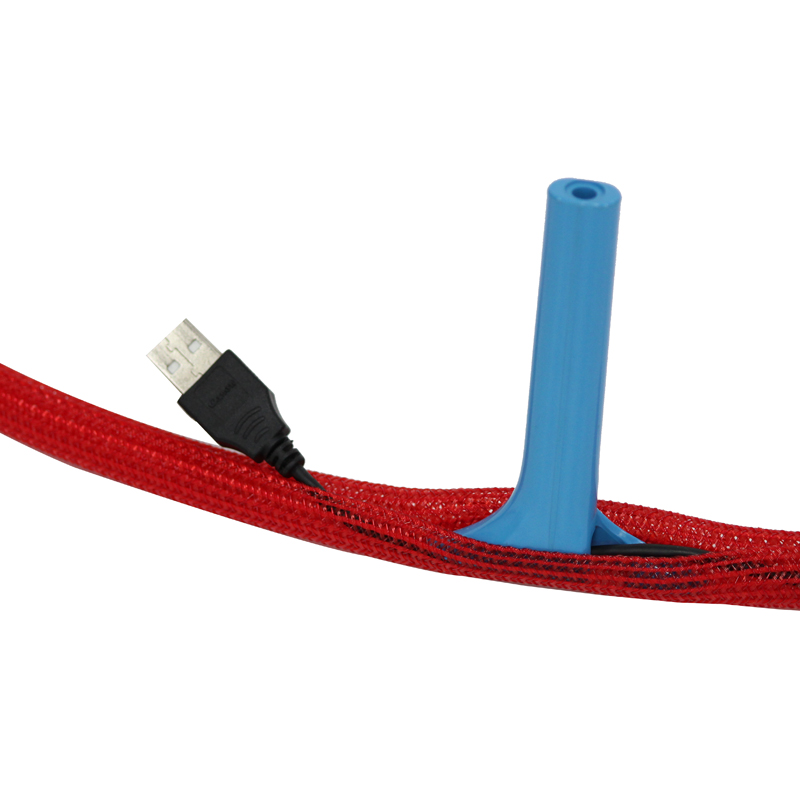
Next, consider the high expandability required for complex assembly routing. Standard sleeves boast a highly versatile 1:3 expansion capability. You can slide the material easily over large inline plugs. It passes over bulky connectors effortlessly. Once released, the sleeve retracts tightly. It grips the underlying wire bundle snugly. This ensures a vibration-resistant fit. Installers save massive amounts of time during manual routing procedures.
Automotive environments constantly expose harnesses to harsh chemical liquids. PET material provides excellent innate fluid and chemical deflection. It resists degradation from engine oil and synthetic lubricants. It also repels corrosive brake fluid, washer fluid, and harsh winter road salts. These chemicals simply wipe off the monofilaments. They never penetrate the plastic fibers to degrade the structural integrity.
Finally, superior thermal dissipation sets this material apart. Solid corrugated tubing often traps dangerous heat inside the harness. It also collects internal condensation. Conversely, an open-weave structure allows moisture to escape rapidly. Heat dissipates freely through the tiny mesh gaps. This prevents internal condensation entirely. It stops dangerous thermal buildup around high-current electrical wiring. This cooling effect greatly extends overall harness lifespans.
Selecting the right polymer dictates harness longevity. You must carefully evaluate specific operating temperatures. PET typically handles continuous ambient heat up to 125°C or 150°C. Nylon often features a higher thermal rating. We follow a simple decision rule here. Specify PET for cabins, interior doors, and general EV battery routing. Reserve Nylon strictly for high-temperature engine bays. Keep PET away from direct exhaust manifold contact.
Flexibility and structural memory also differ greatly between materials. A PET sleeve retains excellent structural memory over decades. It flexes easily around remarkably tight bending radii. It rarely kinks or collapses upon itself. This makes it perfect for tight cornering inside dashboards. Nylon can sometimes feel slightly stiffer in confined spaces. This stiffness makes complex dashboard routing much more difficult for assembly workers.
We must also analyze the cost-to-performance ratio carefully. PET proves significantly more cost-effective overall. It excels during large-scale global production runs. Nylon costs more and often represents engineering overkill. Unless you face extreme engine heat, PET remains the smarter choice. Standard passenger vehicles function perfectly using PET exclusively. Heavy construction equipment might require specialized Nylon components.
Comparison Chart: PET vs. Nylon Sleeving | ||
Performance Metric | PET (Polyethylene Terephthalate) | Nylon (Polyamide) |
|---|---|---|
Continuous Operating Temp | Up to 125°C - 150°C | Up to 150°C - 175°C |
Flexibility & Memory | Excellent memory, rarely kinks | Slightly stiffer in tight bends |
Abrasion Resistance | High | Very High (ideal for heavy friction) |
Cost Efficiency | Highly economical for mass production | Premium pricing model |
Ideal Automotive Zone | Cabins, doors, EV battery routes | Proximity to exhaust or engine blocks |
Knowing the material specifications represents only half the battle. You must master the practical installation challenges next. Cutting and anti-fraying protocols require strict factory attention. You cannot cut these sleeves using standard mechanical scissors. The ends will unravel instantly. An automated thermal cutter or manual hot knife remains an absolute necessity. These heated tools slice and melt the monofilaments simultaneously. This perfectly seals the ends during assembly.
Automotive engineers must constantly verify safety certifications. Look closely at the manufacturer specification sheet before purchasing. You should confirm the following critical standards:
Flammability standards: Ensure compliance testing matches FMVSS 302 or UL 94 V-0 safety requirements.
Halogen-free ratings: This protects passengers from highly toxic outgassing during a rare cabin fire.
Global compliance: Demand RoHS and REACH certifications. These maintain a smooth international component supply chain.
Finally, decide carefully between retrofitting and pre-assembly workflows. Standard tubular sleeves work perfectly for factory pre-assembly. You slide them on before attaching any terminal connectors. Split-wrap or self-closing designs offer a completely different advantage. They easily wrap around existing installed wire harnesses. This lateral installation makes them ideal for dealership retrofits. They remain the best choice for post-production maintenance.
Choosing a reliable manufacturing partner ensures consistent harness quality. A single bad batch of sleeving can halt production lines entirely. It can also trigger massive vehicle recalls. Use these critical evaluation steps to shortlist potential suppliers effectively.
Assess Customization Capabilities: Standard black sleeves do not solve every engineering problem. Can the vendor provide highly custom diameters? You might need varied monofilament thicknesses for extra durability. Color-coding is also essential. High-voltage EV lines legally require bright orange identification. Ensure your supplier can match these exact visual color standards consistently.
Demand Quality Assurance Testing: Transparency separates adequate suppliers from truly excellent ones. Ask for verifiable lab testing data. Reliable vendors gladly share reports detailing mechanical scrape abrasion cycles. They also provide comprehensive thermal aging test results. Never rely solely on generic marketing brochures. Request actual ISO certification documentation.
Evaluate Supply Chain Scalability: High-volume bulk orders require exceptionally strict consistency. Assess the vendor's ability to maintain tight dimensional tolerances. Consistent expansion ratios across thousands of spools remain critical. Supply chain delays severely hurt assembly lines. Ensure the manufacturer has sufficient global production capacity. They must handle sudden volume spikes seamlessly.
A common mistake involves prioritizing low unit price over proven dimensional tolerances. Minor diameter inconsistencies drastically slow down manual harness assembly times. You must prioritize quality control above everything else during vendor selection.
Automotive electrical demands grow more complex every single year. You absolutely need dependable, lightweight cable management. PET braided sleeves offer an exceptionally versatile engineering solution. They beautifully balance rugged physical defense against optimal structural flexibility. They also provide impressive cost-efficiency for mass manufacturing. They satisfy the core routing requirements of modern passenger vehicles. They excel inside advanced electric vehicle platforms.
Take concrete action to upgrade your wire harness designs today. Reach out to prospective component suppliers. Request detailed material data sheets immediately. Order sample spools for rigorous in-house fitment testing. Consult directly with expert technical sales teams. They can help thoroughly evaluate your custom harness requirements. Proper early evaluation completely prevents catastrophic electrical failures down the road. It ensures a safer, more reliable vehicle architecture.
A: A standard sleeve typically features a continuous operating temperature range of -50°C to 150°C. The material generally reaches its structural melt point around 250°C. This specific thermal range makes it perfectly suited for vehicle interiors. It works flawlessly inside door panels and under-chassis routing applications.
A: Yes, but it heavily depends on its proximity to extreme heat sources. You must keep it away from the exhaust manifold. Avoid direct engine block contact. If your routing crosses severe temperature thresholds, we highly recommend utilizing heat-reflective variants. Alternatively, switch to high-temperature nylon-based materials.
A: You must use the hot-knife thermal cutting method. A heated blade slices through the material easily. It simultaneously melts the plastic monofilaments. This action fuses the individual fiber ends together. It creates a clean, permanently sealed edge. This entirely prevents the sleeve from unravelling during assembly.
A: Yes. Manufacturers specifically design highly visible, orange-colored variants for this exact purpose. These high-voltage options meet strict industry identification standards. They are halogen-free and highly durable. They safely defend sensitive EV battery cables against road debris. They also absorb constant chassis vibration effectively.