- All
- Product Name
- Product Keyword
- Product Model
- Product Summary
- Product Description
- Multi Field Search
Views: 0 Author: Site Editor Publish Time: 2026-06-19 Origin: Site
Modern aerospace engineering operates on the razor's edge of material science. Protecting critical wire harnesses in these brutal environments requires balancing extreme thermal resistance, severe weight constraints, and rapid ease of maintenance. Conventional solutions like standard braided sleeving or heat-shrink barriers often perform well for general electronic enclosures. However, high-temperature engine zones, landing gear wells, and pressurized cabins demand highly advanced polymers. They must survive punishing operational cycles without structural failure.
This article provides a comprehensive, evidence-based evaluation of self-winding PEEK Tubing tailored specifically for aerospace engineers and procurement teams. We will thoroughly explore its critical thermal limits, analyze strict compliance factors, and outline key implementation risks. By understanding these mechanical and chemical dynamics, you can confidently optimize wire protection in your next aerospace build.
Thermal Ceilings: PEEK maintains mechanical integrity in continuous use up to 260°C (500°F), outperforming standard fluoropolymers in structural stability.
Maintenance Efficiency: The self-winding memory-recoil design eliminates the need for heat guns during installation, allowing for in-situ retrofitting and rapid harness inspections.
Weight-to-Strength Ratio: Offers superior abrasion resistance to metal braiding at a fraction of the weight, directly supporting fuel-efficiency mandates.
Compliance Readiness: Inherently meets stringent aerospace Flammability, Smoke, and Toxicity (FST) standards without heavy chemical retardants.
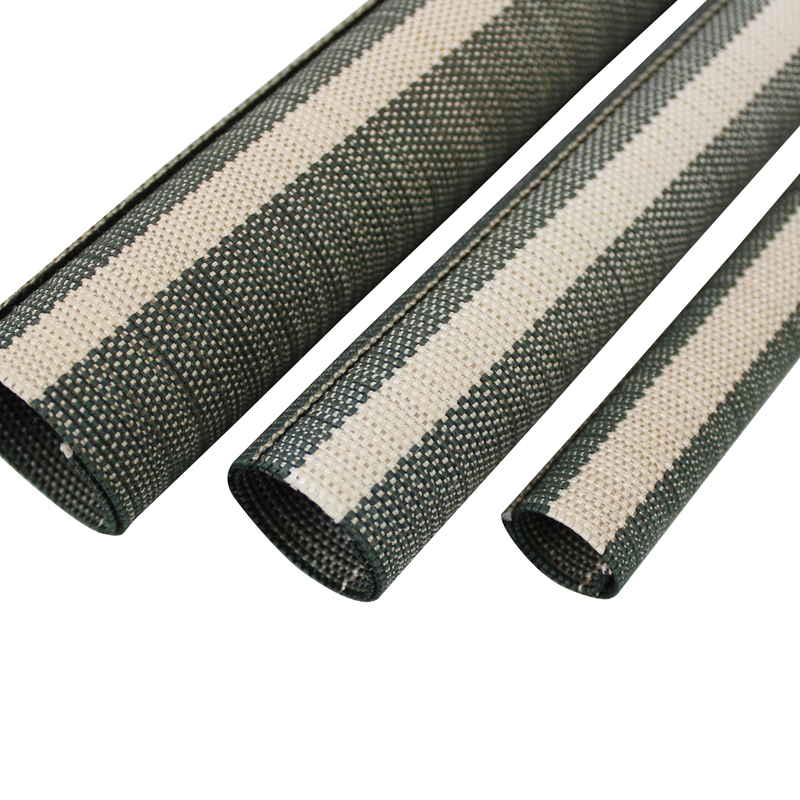
Understanding the mechanical properties of a PEEK Tube begins with its manufacturing process. Manufacturers rely on a specialized thermal-setting procedure to create its defining characteristic. They heat the extruded polymer above its glass transition temperature while wrapped around a forming mandrel. Once cooled, the material retains a permanent set. This creates a powerful memory recoil. The design typically incorporates a 25% overlap along the longitudinal split. This overlapping seam ensures complete 360-degree coverage around internal wiring. It prevents exposure even when routed tightly around complex bend radii.
This specific mechanical design offers a massive operational advantage. Traditional pull-through braiding requires engineers to feed wires through a closed sleeve before attaching connectors. Heat-shrink sleeving demands hot air guns and precise timing. The self-winding split format eliminates both hurdles. Maintenance crews can install or remove the protective sleeving directly over existing, fully assembled connectors. You never have to break the circuit. This capability drastically reduces Aircraft on Ground (AOG) time during critical repairs or standard inspections.
Aerospace environments constantly subject internal systems to high-frequency vibrations. These vibrations cause severe wire chafing over time. PEEK possesses exceptionally high tensile strength, typically exceeding 90 MPa. This strength creates a robust physical barrier against constant abrasion. It actively mitigates chafing damage against surrounding metal airframes, composite bulkheads, or adjacent mechanical components. The material absorbs the frictional energy, keeping the delicate internal wire insulation completely safe from degradation.
Aerospace engineers must strictly separate two vital temperature metrics when selecting polymers. You must differentiate between a material's melting temperature and its safe continuous use temperature. PEEK boasts an impressive melting point of approximately 343°C (650°F). However, structural softening occurs long before the polymer reaches a liquid state. Its safe continuous use temperature sits lower, reliably rated at 260°C (500°F). Exceeding this continuous limit degrades the thermal-set memory. The sleeve will slowly lose its recoil force and spring open.
High-temperature aerospace applications frequently operate near these upper limits. Engineers heavily specify this polymer for engine nacelles and auxiliary power units (APUs). These isolated zones generate intense radiant heat during prolonged flight cycles. Landing gear wheel wells present another critical application area. Massive kinetic energy transfers into brake assemblies during heavy aircraft landings. The resulting radiant heat easily damages conventional wiring components routed nearby. Advanced polymer sleeving acts as a vital thermal buffer in these highly confined spaces.
Thermal expansion also requires careful engineering foresight. Like all polymers, this material undergoes dimensional changes when exposed to extreme heat. PEEK exhibits a specific coefficient of linear thermal expansion (CLTE). When specifying harness lengths for high-heat zones, engineers must calculate and assume minor longitudinal growth. Failing to account for this expansion can cause the sleeve to bunch or press against sensitive connectors. Proper tolerancing ensures the sleeve remains secure without inducing unwanted mechanical stress on the wire bundle.
Material selection rarely relies on a single performance metric. You must weigh competing chemical and mechanical traits. Polytetrafluoroethylene (PTFE), widely known as Teflon, easily handles high heat environments. However, PEEK offers exponentially higher mechanical toughness. It boasts vastly superior crush resistance compared to PTFE. Furthermore, PTFE suffers from "cold flow." It slowly deforms under constant mechanical pressure, such as a tight cable tie. The structural rigidity of polyetheretherketone virtually eliminates this cold flow risk.
Torlon (PAI) represents another extreme-temperature aerospace polymer. Torlon delivers exceptional high-temperature strength and impressive wear properties. Despite these strengths, PEEK remains the superior choice for self-winding extruded formats. Torlon requires complex, lengthy post-curing cycles to achieve its final properties. It is also highly sensitive to moisture absorption. Polyetheretherketone maintains better overall flexibility, resists moisture ingress almost entirely, and offers reliable processing stability during continuous extrusion.
Weight reduction mandates drive modern aircraft design. Every gram saved translates to lower fuel burn and extended range. Engineers traditionally relied on heavy Nomex or metal braided shields for abrasion defense. Replacing these legacy systems yields massive weight savings. A self-winding polymer sleeve offers a fraction of the weight per meter compared to dense metallic braids. Across a commercial airframe containing miles of wiring, these incremental savings compound into hundreds of kilograms of total weight reduction.
Aerospace Polymer Comparison Chart | |||
Material Property | PEEK | PTFE | Torlon (PAI) |
|---|---|---|---|
Continuous Use Temp | 260°C | 260°C | 260°C |
Mechanical Toughness | Excellent | Low (Prone to Cold Flow) | Excellent |
Moisture Resistance | Superior | Superior | Poor (Absorbs moisture) |
Self-Winding Capability | Optimal (Strong Recoil) | Poor (Lacks Rigidity) | Challenging Extrusion |
Aerospace safety dictates uncompromising adherence to Flammability, Smoke, and Toxicity (FST) standards. The Federal Aviation Administration enforces FAR 25.853 to govern material performance during cabin and cargo fires. PEEK naturally passes these rigorous vertical burn tests. It requires no added chemical flame retardants to achieve compliance. When subjected to direct flame, the material quickly self-extinguishes. Furthermore, it limits toxic off-gassing during combustion. This intrinsic purity protects passengers and crew from lethal smoke inhalation during emergency scenarios.
Chemical and fluid resistance forms another pillar of aerospace reliability. Aircraft systems leak heavily aggressive fluids during routine operation. Hydraulic fluids, particularly Skydrol, aggressively degrade standard plastics and elastomers. PEEK maintains total immunity to Skydrol exposure. It also resists jet fuels like Jet A and Jet A-1 without swelling or degrading. The polymer withstands harsh winter de-icing agents and synthetic engine lubricants. This broad chemical inertness ensures the sleeving will not break down or melt into the wire harness over decades of service.
Procurement teams must carefully verify standardization claims. Never assume a product meets aerospace standards purely based on the base resin name. Advise buyers to request comprehensive testing data from suppliers before integration. Require AS9100 manufacturing certifications to ensure facility-level quality control. Demand strict lot traceability from the raw resin batch to the final extruded spool. Always review batch testing reports validating physical dimensions and mechanical limits. Proper documentation prevents substandard counterfeit materials from compromising critical flight hardware.
Even premium materials fail if technicians install them incorrectly. The most common implementation error involves over-stuffing the internal cavity. Engineering guidelines firmly recommend a maximum fill ratio of 70%. Exceeding this volumetric limit stresses the thermal memory. It forces the 25% overlap permanently open, exposing the delicate wiring underneath. An open seam completely negates the abrasion resistance and structural protection of the product. Technicians must correctly size the inner diameter to match the wire bundle.
Bend radius limitations require strict attention during harness routing. Every extruded profile possesses a minimum bend radius dictated by its wall thickness and diameter. Attempting to route the sleeve around extreme angles causes mechanical failure. The tubing will buckle on the inner curve and tightly kink. A kink creates an aggressive pinch point. This localized pressure actively stresses the internal harness, potentially fracturing delicate copper conductors over time. Always design routing paths to respect the published bend radius guidelines.
Cutting techniques directly impact long-term reliability. Technicians must use the correct tooling when cutting lengths on the assembly line. Standard scissors or dull blades cause jagged edges and micro-fractures in the rigid polymer matrix. High-frequency aircraft vibration causes these micro-fractures to propagate into long structural tears. Always utilize a high-temperature hot knife or specialized heavy-duty shears. Proper tooling leaves a clean, sealed edge that resists fraying and prevents crack propagation during turbulent flight profiles.
Strategic sourcing requires evaluating specific material grades. The base polymer works flawlessly for most standard abrasion and thermal barrier needs. However, engineering requirements often dictate emerging material innovations. You must know when to specify virgin grades versus modified variations. Carbon-filled profiles offer crucial static-dissipative properties to prevent spark generation near fuel lines. Glass-filled variations deliver even higher structural rigidity for extreme crush-hazard zones. Match the specific grade to your unique environmental hazard.
Customization capabilities define a top-tier aerospace supplier. Off-the-shelf dimensions rarely fit proprietary aerospace builds perfectly. Your supplier must demonstrate the ability to customize precise overlap ratios. They must consistently hold tight tolerances on custom inner diameters (ID). Adjusting wall thicknesses allows engineers to balance weight limits against required abrasion resistance. A supplier incapable of custom tooling will force you into poor engineering compromises, ultimately resulting in over-stuffed harnesses or excess weight.
Initiating a supplier partnership requires a strict evaluation methodology. Follow these structured criteria when moving to the prototype phase:
Request Material Data Sheets (MDS): Verify the exact continuous use temperatures and tensile strength metrics for the specific extruded profile.
Acquire First-Article Inspection (FAI) Reports: Confirm the manufacturer can hold exact dimensional tolerances during the initial production run.
Conduct Prototype Fit-Testing: Order sample spools to verify the 70% fill ratio and evaluate the spring-recoil force during manual installation.
Verify Traceability Protocols: Ensure the supplier provides comprehensive batch documentation linked directly to the original resin manufacturer.
Self-winding split sleeving made from advanced polyetheretherketone is far from a basic commodity. It represents a highly engineered component absolutely critical for high-temperature, high-stakes aerospace applications. We have explored how its unique mechanical memory allows for seamless retrofitting, vastly improving maintenance efficiency. We also detailed its strict continuous thermal ceiling of 260°C and its inherent ability to pass rigorous FAA flammability standards without heavy additives.
As a final assessment rule, reserve this highly capable material for the most demanding environments on the airframe. Recommend it specifically for scenarios where continuous heat exposure, aggressive chemical fluids, and the need for rapid maintenance access heavily overlap. Focus its use around APUs, engine nacelles, and heavy landing gear components to maximize its protective value.
Do not finalize your harness designs in isolation. Reach out and consult with a dedicated polymer materials specialist. They will help you accurately calculate your required fill ratios, account for thermal expansion, and match your specific thermal loads to the exact profile required. Proactive engineering ensures your aerospace wire harnesses remain protected, compliant, and flight-ready.
A: Yes. The specialized split-wrap design allows mechanics to slide the sleeve directly over the harness. You can install it without decoupling existing heavy connectors. This feature makes it highly ideal for rapid Maintenance, Repair, and Overhaul (MRO) operations.
A: The polymer retains excellent ductility even at sub-zero temperatures. It resists severe mechanical embrittlement typical of high-altitude commercial flight profiles. This ensures the sleeve will not shatter or crack during cold-soak conditions.
A: No, virgin polyetheretherketone acts as an excellent electrical insulator. It does not block electromagnetic interference. To achieve EMI/RFI shielding, you must specify modified grades containing conductive fillers or wrap the polymer over an underlying metal braid.