- All
- Product Name
- Product Keyword
- Product Model
- Product Summary
- Product Description
- Multi Field Search
Views: 0 Author: Site Editor Publish Time: 2026-09-16 Origin: Site
In aerospace, chemical processing, and heavy industrial applications, standard cable jacketing materials fail under extreme thermal, chemical, and environmental stress. This failure leads to catastrophic system downtime, electrical hazards, and severe safety risks. Engineers must balance the need for extreme temperature tolerance, fire safety, and chemical inertness with the mechanical necessity of routing cables through tight, dynamic, or high-vibration spaces. Rigid conduits cannot accommodate complex routing. Standard flexible plastics melt, degrade, or emit hazardous smoke when exposed to high heat.
FEP (Fluorinated Ethylene Propylene) emerges as a specialized fluoropolymer solution. This guide evaluates the technical properties, performance trade-offs, and specification criteria for using FEP corrugated tubing in mission-critical cable protection.
Thermal & Chemical Resilience: FEP maintains structural integrity and dielectric strength in continuous operating temperatures up to 200°C (392°F) while resisting nearly all industrial chemicals, solvents, and aggressive liquids.
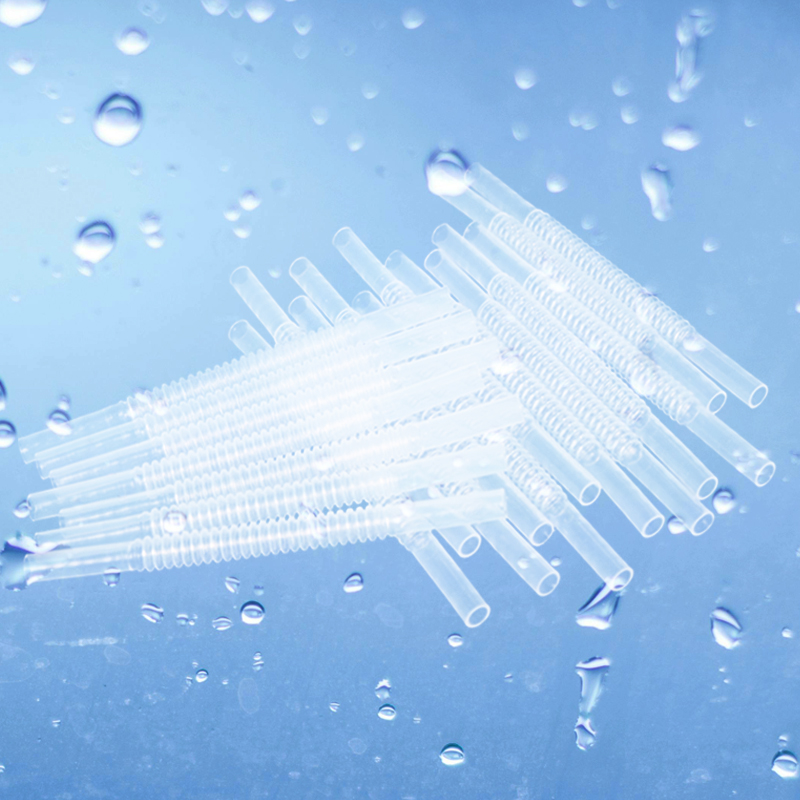
Mechanical Flexibility: The corrugated geometry transforms a naturally semi-rigid fluoropolymer into a highly flexible corrugated conduit, allowing for tight bend radii without kinking or compromising the internal cable payload in confined spaces.
Dielectric Superiority & Safety: Exceptional electrical insulation properties create a robust barrier that prevents electrical currents from escaping in high-voltage applications, while its low flammability ensures safety in enclosed environments.
Strategic Sourcing: Specifying the correct wall thickness, profile, and slit/unslit configuration from a qualified corrugated conduit manufacturer is critical to mitigating installation risks and maximizing lifecycle ROI.
High-stress environments demand zero-failure tolerance. When you route cables through a chemical plant or an aircraft chassis, the protection system must perform flawlessly. Baseline requirements include strict regulatory compliance. Materials must meet specific plenum or flammability ratings. They must also demonstrate long-term material stability under continuous exposure to extreme elements.
Engineers cannot rely on standard consumer-grade plastics. A successful cable protection strategy requires materials that actively repel corrosive agents. The conduit must maintain its structural shape without sagging or cracking over decades of use. It must also provide a reliable dielectric barrier to prevent arc tracking or short circuits. You must evaluate the specific failure modes of your environment before selecting a jacketing material.
Material Type | Primary Failure Mode in Harsh Environments | Operational Consequence |
|---|---|---|
PVC (Polyvinyl Chloride) | Softens and melts above 105°C; becomes brittle below -20°C. | Exposes wires to abrasion and moisture; cracks under vibration. |
PE (Polyethylene) | Highly susceptible to UV degradation and thermal oxidation. | Chalks, cracks, and loses mechanical strength outdoors. |
PUR (Polyurethane) | Degrades rapidly when exposed to strong acids or bases. | Chemical swelling leads to jacket rupture and fluid ingress. |
FEP (Fluoropolymer) | Maintains integrity from -200°C to 200°C; chemically inert. | Provides continuous, zero-failure protection in extreme conditions. |
Traditional materials like PVC, PE, and PUR fail predictably in harsh conditions. At low temperatures, these standard plastics become brittle. They shatter under minor impacts or routine vibration. At high temperatures, they soften, warp, and eventually melt. This thermal degradation exposes sensitive internal wires to abrasion, moisture ingress, and electrical arcing.
Thermal cycling accelerates this breakdown. As machinery heats up and cools down, standard jackets expand and contract. This constant movement creates micro-fractures in the plastic. Over time, these fractures propagate. The conduit splits open, leaving the electrical payload completely unprotected. You need a material that ignores these thermal fluctuations entirely. FEP provides this stability, ensuring the protective layer remains intact regardless of rapid temperature shifts.
Modern machinery, robotics, and aerospace applications present severe spatial constraints. Engineers must route thick cable bundles around sharp corners, through narrow bulkheads, and alongside moving mechanical parts. Rigid metal piping offers excellent protection but zero routing flexibility. Thick-walled straight tubing kinks when bent too far, cutting off the internal diameter and crushing the cables.
These constraints necessitate a flexible corrugated conduit. The alternating ridges and grooves allow the tube to bend sharply without collapsing. This geometry makes it easy to handle in tight spaces. Installers can navigate complex pathways rapidly without requiring specialized bending tools or elbow joints. The physical design of the conduit directly dictates the speed and success of the installation process.
Fluoropolymers dominate high-performance engineering, but they are not identical. Selecting the right polymer dictates the success of your cable routing. You must understand the distinct differences between FEP, PTFE, and PFA to make an informed specification.
Compare FEP to PTFE (Polytetrafluoroethylene). PTFE offers slightly higher temperature resistance, surviving up to 260°C. However, PTFE is not melt-processable. It must be paste-extruded, which limits the complexity of the shapes you can manufacture. FEP is melt-processable. This allows manufacturers to extrude precise, complex corrugated profiles. FEP is naturally more flexible than PTFE. This makes it significantly easier to handle during complex routing tasks.
Compare FEP to PFA (Perfluoroalkoxy). PFA matches PTFE's 260°C temperature rating and is also melt-processable. PFA is generally stiffer and comes at a significantly higher procurement cost. For applications remaining under 200°C, FEP provides superior flexibility and a much more favorable performance ratio.
Property | FEP | PTFE | PFA |
|---|---|---|---|
Continuous Max Temperature | 200°C (392°F) | 260°C (500°F) | 260°C (500°F) |
Melt-Processable | Yes | No | Yes |
Flexibility | High | Low to Moderate | Moderate |
Corrugated Profile Capability | Excellent | Poor | Good |
FEP boasts an exceptionally broad operating window. It functions reliably from cryogenic lows of -200°C up to high-temperature peaks of 200°C. In freezing environments, it retains excellent low-temperature toughness. It will not shatter when subjected to mechanical shock in sub-zero conditions. This makes it a standard choice for high-altitude aerospace applications and cryogenic fluid handling systems.
Fire safety is another distinct advantage. FEP exhibits very low flammability. It has a high Limiting Oxygen Index (LOI), meaning it will not support combustion in normal atmospheric conditions. When exposed to direct flame, it generates minimal smoke and resists dripping. This makes it ideal for enclosed aerospace, transit, or cleanroom applications where smoke toxicity is a primary life-safety concern. Regulatory bodies frequently mandate materials with these exact fire-retardant properties.
Electrical integrity is paramount in heavy industrial settings. FEP features a remarkably low dielectric constant (typically around 2.1) and high dielectric strength. It acts as a robust secondary insulation layer over your primary cable jackets. This prevents signal interference in sensitive data cables and stops voltage leaks in power lines.
This insulation actively prevents electrical currents from escaping. In high-voltage applications, a compromised wire jacket can lead to catastrophic arcing. The FEP corrugated conduit contains this energy. It enhances both system reliability and human safety by ensuring that live currents remain isolated, even if the internal wire insulation degrades over time.
Industrial environments expose cables to harsh chemicals daily. FEP provides near-total chemical inertness. It resists aggressive environments, including hydraulic fluids, strong acids, bases, and organic solvents. It does not swell, dissolve, or degrade when exposed to these substances. You can route cables directly through splash zones without fear of material breakdown.
This chemical resistance is highly valuable in submerged applications. Engineers frequently use corrugated conduit for cable protection when routing wiring for liquid level sensors inside corrosive chemical tanks. The conduit shields the delicate sensor wires from the caustic fluid, ensuring accurate readings and preventing premature sensor failure. It acts as an impenetrable barrier against fluid ingress.
Chemical Category | FEP Resistance Level | Common Industrial Examples |
|---|---|---|
Strong Acids | Excellent | Sulfuric Acid, Hydrochloric Acid, Nitric Acid |
Strong Bases | Excellent | Sodium Hydroxide, Potassium Hydroxide |
Organic Solvents | Excellent | MEK, Acetone, Toluene, Xylene |
Aviation Fluids | Excellent | Skydrol, Jet A Fuel, Hydraulic Fluids |
The physical design of the conduit is just as important as the material. The corrugated profile features alternating ridges and grooves. This geometry distributes bending stress evenly across the surface of the tube. It prevents the material from folding inward under pressure.
Because of this stress distribution, high temperature corrugated tubing can navigate tight corners without collapsing. The inner diameter remains open and consistent. It does not restrict internal cable movement or pinch the wires. You can achieve exceptionally tight bend radii that would be impossible with smooth-walled tubing of the same diameter. This flexibility drastically reduces installation time in complex machinery.
Dynamic applications subject cables to constant physical abuse. Robotics, automotive wire harnesses, and heavy machinery involve continuous movement and vibration. This friction quickly wears through standard wire jackets, leading to exposed copper and immediate short circuits.
FEP provides excellent physical protection. The corrugated ridges act as a bumper system. They absorb blunt impacts and resist abrasion from surrounding metal components. The low coefficient of friction inherent to fluoropolymers also means the conduit slides smoothly against other surfaces, reducing wear and tear on the installation environment. It protects both the cables inside and the machinery outside.
Outdoor installations face relentless exposure to sunlight and weather. Ultraviolet radiation causes standard plastics to chalk, crack, and lose their mechanical strength. FEP is virtually immune to UV degradation. It maintains its clarity, flexibility, and structural integrity even after years of direct sunlight exposure.
It also exhibits near-zero moisture absorption. Rain, humidity, and saltwater spray do not affect its structural or electrical properties. This exceptional weathering resistance makes it perfectly suitable for exposed outdoor, marine, or exterior aerospace applications where environmental elements destroy lesser materials. You can deploy it in coastal facilities without worrying about salt fog corrosion.
Selecting the correct size is critical for performance. You must calculate the correct Inner Diameter (ID) based on your specific cable bundle size. Do not pack the conduit completely full. Overfilling restricts movement and traps heat, leading to premature failure of the internal wires.
Engineers recommend a 25-30% fill ratio. This means the cables should occupy no more than 30% of the available internal cross-sectional area. This generous spacing allows for adequate heat dissipation. It also preserves the flexibility of the conduit. If you overfill the tube, it becomes rigid and difficult to route, defeating the purpose of the corrugated design.
Cable Bundle Outer Diameter (OD) | Recommended Conduit Inner Diameter (ID) | Approximate Fill Ratio |
|---|---|---|
5 mm | 10 mm | 25% |
10 mm | 19 mm | 28% |
15 mm | 28 mm | 29% |
20 mm | 38 mm | 28% |
You must balance flexibility against crush resistance by specifying the right wall thickness. Thin-wall configurations offer maximum flexibility and lower overall weight. They are ideal for complex routing in lightweight aerospace applications where every gram matters.
Thick-wall configurations provide higher crush resistance and superior protection against heavy impacts. They sacrifice some flexibility to achieve this durability. You must evaluate the specific mechanical hazards of your environment to choose the appropriate profile geometry. Heavy industrial floors require thick walls, while robotic arms benefit from thin walls.
Manufacturers offer corrugated tubing in both slit and unslit formats. Each serves a distinct operational purpose depending on your installation timeline and environmental hazards.
Unslit: This configuration provides a continuous, unbroken barrier. It is best for complete fluid and moisture sealing. It offers maximum structural integrity and is ideal for submerged or highly corrosive environments where fluid ingress is catastrophic.
Slit: A longitudinal cut runs the entire length of the tubing. This is necessary for retrofitting existing cable assemblies without disconnecting the hardware. It simplifies maintenance and repairs. It sacrifices hermetic sealing and cannot be used where total fluid exclusion is required.
Fluoropolymers command a premium price compared to standard plastics. You must analyze this higher initial procurement cost against long-term operational savings. Standard plastics require frequent replacement and cause unexpected downtime.
FEP eliminates frequent maintenance cycles. It drastically reduces the need for replacement parts. Most importantly, it prevents catastrophic system failures that cause expensive downtime. When you factor in the extended lifespan and zero-failure reliability, custom FEP corrugated tubing delivers a highly favorable return on investment for mission-critical systems. You pay for decades of uninterrupted performance.
Even highly flexible materials have physical limits. The primary installation risk is over-bending the conduit beyond its specified minimum bend radius. If you force the tubing into a corner that is too tight, you create concentrated stress points on the outer ridges.
This stress can cause micro-fractures or permanent deformation, even in corrugated designs. Installers must be trained to respect the manufacturer's bend radius specifications. Use proper routing guides and stand-offs to ensure the conduit maintains a natural, stress-free curve. Never pull the conduit taut across sharp metal edges.
Securing the ends of the conduit presents a unique challenge. FEP has an extremely low surface energy. Standard adhesives, tapes, and glues will not stick to it. If you need a sealed system, traditional potting compounds will fail to bond, leaving a gap for moisture to enter.
To achieve secure, leak-proof terminations, you must use specialized methods. Recommend mechanical fittings designed specifically for corrugated profiles. Alternatively, use complementary FEP or PTFE heat-shrink boots to create a tight seal. For advanced applications, the ends of the tubing can be chemically etched to allow high-performance epoxies to bond securely to the fluoropolymer surface.
The quality of your installation depends entirely on the quality of the extrusion. You must select a vendor with proven expertise in fluoropolymer processing. Outline strict criteria for vetting your corrugated conduit manufacturer to ensure you receive a reliable product.
Look for ISO certifications and documented quality control processes. If your application involves medical or aerospace components, verify their cleanroom manufacturing capabilities. Precision extrusion tolerances are non-negotiable. When ordering, you must supply exact operating voltages, dimensional constraints, and service conditions. This ensures the manufacturer can engineer an accurate profile tailored to your precise environment.
Measure your complete cable bundle outer diameter to establish the baseline inner diameter required for a 30% maximum fill ratio.
Identify the tightest routing corner in your installation pathway to determine the strict minimum bend radius required for the tubing.
Audit your environmental hazards to select between a slit profile for rapid retrofitting or an unslit profile for complete fluid exclusion.
Request physical material samples and technical data sheets from a specialized extrusion partner to validate dimensional tolerances before mass procurement.
A: FEP corrugated tubing supports a continuous maximum operating temperature of 200°C (392°F). It maintains structural integrity, flexibility, and dielectric strength at this heat level. It withstands brief thermal excursions slightly above this limit, though continuous exposure beyond 200°C eventually degrades the material.
A: FEP is melt-processable, allowing manufacturers to create highly flexible, complex corrugated profiles that navigate tight spaces easily. PTFE offers a slightly higher temperature limit (260°C) but is paste-extruded, making it stiffer and much more difficult to form into flexible corrugated shapes for complex routing.
A: Yes. FEP exhibits very low flammability and has a high Limiting Oxygen Index (LOI). It does not easily support combustion. When exposed to extreme heat or direct flame, it generates very low smoke and resists dripping, making it highly suitable for enclosed spaces and aerospace environments.
A: Absolutely. FEP provides extreme chemical inertness. It resists nearly all strong acids, bases, organic solvents, and hydraulic fluids. Unslit configurations are frequently used in submerged applications, such as protecting delicate wiring for liquid level sensors inside highly corrosive chemical storage tanks.
A: Unslit conduit is a solid, continuous tube that provides complete environmental sealing against fluids and moisture. Slit conduit features a lengthwise cut, allowing you to easily wrap it around existing cable bundles for rapid retrofits or maintenance, though it sacrifices hermetic fluid sealing.
A: Measure the outer diameter of your complete cable bundle. Select a conduit inner diameter that allows for a 25-30% fill capacity. Leaving 70% of the internal space empty ensures proper heat dissipation, maintains the conduit's flexibility, and prevents internal wire pinching during sharp bends.