- All
- Product Name
- Product Keyword
- Product Model
- Product Summary
- Product Description
- Multi Field Search
Views: 0 Author: Site Editor Publish Time: 2026-06-12 Origin: Site
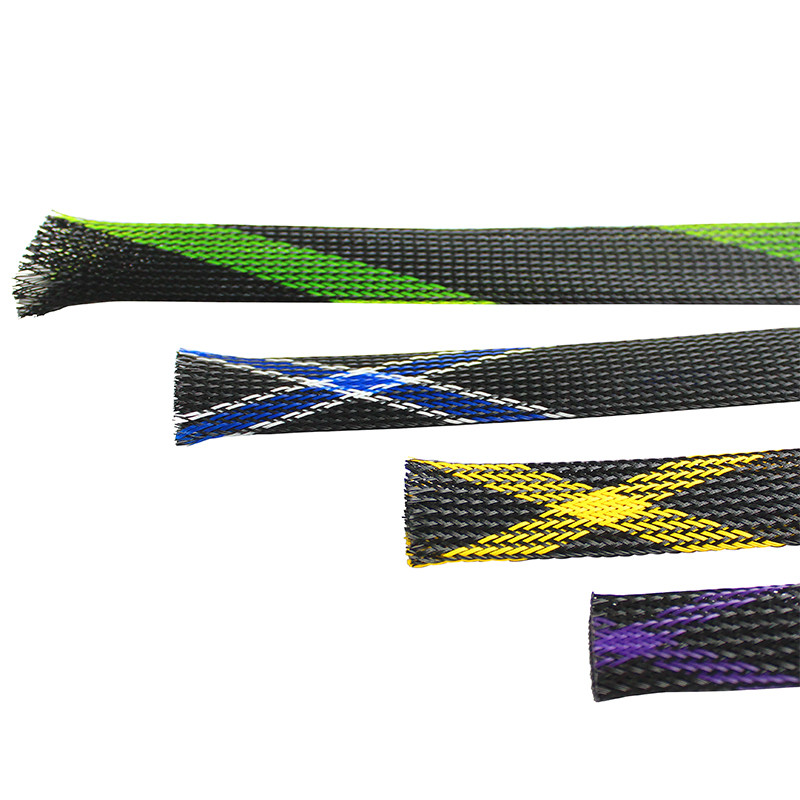
Wire harness failure presents a costly operational risk. It causes unexpected downtime, dangerous electrical shorts, and severe safety hazards. You cannot treat wire management as a simple aesthetic choice. Instead, you must deploy a highly reliable barrier against environmental damage. Braided Cable Sleeving provides the optimal balance for modern engineering. It delivers heavy-duty defense similar to corrugated conduit. Yet, it maintains the tight-space flexibility you expect from heat shrink tubing or standard tape.
Selecting the right sleeving requires careful evaluation. You must analyze specific environmental stressors in your application. You also need to consider retrofitting requirements and exact material tolerances. By understanding these specific factors, you ensure long-term reliability for your complex electrical systems. We will explore how to specify the exact structural design and material for your wire routing needs.
Material selection dictates survival: PET is for general use, Nylon for high abrasion, and Nomex/Fiberglass for extreme heat.
Structural design matters: Choose expandable sleeving for new harness builds and self-wrapping (split) sleeving for retrofitting or field repairs.
Accurate sizing requires accounting for the expansion ratio and the maximum diameter of connectors, not just the wire bundle.
Improper installation (e.g., cold cutting instead of hot-knife cutting) leads to fraying and compromises long-term cable protection.
Engineers face multiple threats when designing wire harnesses. Continuous abrasion wears down insulation over time. Thermal degradation rapidly destroys standard plastics. Chemical exposure weakens unprotected wires. High-frequency vibration acts as a silent killer. This continuous vibration causes severe damage in automotive, EV, and industrial robotics applications. You need robust defenses to prevent systemic electrical failures.
Let us compare common protection methods. Understanding these differences helps you make informed engineering choices.
Corrugated conduit is incredibly tough but highly rigid. Braided sleeving offers superior flexibility and creates much less bulk. It also prevents dangerous moisture trapping. Breathable woven fibers allow dampness to escape easily. This prevents internal corrosion.
Heat shrink forms a tight, waterproof seal. However, it stiffens the entire wire harness permanently. Braided sleeves allow for easy post-installation breakout routing. You can direct individual wires out of the main bundle smoothly. You never have to compromise the overall flexibility.
Tape offers a quick fix. Unfortunately, adhesive compounds degrade rapidly over time. Braided materials provide verifiable, consistent abrasion resistance. They never leave sticky residue. They also will not unwrap unexpectedly during machine operation.
Protection Type | Flexibility | Moisture Control | Breakout Ease |
|---|---|---|---|
Braided Sleeving | Excellent | Highly Breathable | Very Easy |
Corrugated Conduit | Poor | Traps Moisture | Difficult |
Heat Shrink | Moderate | Waterproof Seal | Requires Pre-planning |
Electrical Tape | High | Traps Moisture | Messy over time |
Material science dictates how well your harness survives. You must match the exact fiber type to the operating environment. We break down these core materials based on environmental resilience and practical cost-to-performance ratios. Proper selection ensures effective Cable Protection under harsh, demanding conditions.
PET is the most popular choice for general-purpose routing. You will find it inside indoor electronics and standard automotive interiors. It balances basic mechanical defense against low material costs.
Pros: It is highly cost-effective. PET handles a broad temperature range between -70°C and 125°C. It also exhibits high chemical resistance against everyday solvents and cleaning agents.
Cons: PET is less suited for continuous heavy friction. It will eventually wear through under extreme mechanical scraping.
Best Practice: Use PET for static wiring where physical movement remains minimal.
Nylon steps up the durability significantly. It is best for heavy construction equipment, automotive under-hood applications, and dynamic industrial robotics. Nylon easily handles cyclic bending movements.
Pros: It provides superior abrasion resistance compared to standard PET. Nylon heavily absorbs repetitive scraping and aggressive mechanical abuse.
Cons: Nylon fibers are slightly stiffer. This limits extremely tight bend radii. This material is also moderately more expensive than basic PET options.
Best Practice: Deploy Nylon on dragging robotic arms or exposed chassis runs.
Special applications demand advanced polymers or highly specific metal weaves. Standard plastics fail instantly in these extreme operational environments.
Nomex and Kevlar: These advanced fibers are strictly essential for aerospace sectors and high-temperature EV applications. They offer extreme flame retardance and immense thermal stability. Nomex will never melt in aggressive engine bay environments.
Tinned Copper and Metal: Standard plastics cannot block electromagnetic interference. Tinned copper is strictly required for EMI/RFI shielding. Engineers use it to protect sensitive data lines and critical power routing configurations from noise pollution.
Your implementation realities dictate the required sleeve structure. You must frame this choice around your specific manufacturing or maintenance workflow. Choosing the right structural design saves hundreds of production hours.
Expandable sleeves form a continuous, unbroken woven tube. This provides maximum 360-degree security around the enclosed wires.
Use Case: This design completely dominates OEM manufacturing and brand-new wire harness builds.
Mechanics: You must thread wires through the sleeve before you terminate the end connectors. Expandable designs offer up to a 3:1 expansion ratio. This wide expansion allows the material to slide easily over large plugs. Once you pull it taut lengthwise, the braid retracts inward. This creates a beautifully tight, secure fit around the wire bundle.
Split sleeves feature an overlapping, semi-rigid construction. They remember their tubular shape naturally.
Use Case: They are engineered specifically for rapid field repairs, system retrofitting, and ongoing maintenance. You can install them quickly without ever disconnecting active system components.
Mechanics: The split design features a 25% minimum overlap along the side. This built-in overlap ensures complete protective closure. It remains securely closed even when you route the cables around sharp bends. This design entirely eliminates the tedious need to de-pin delicate connectors during field service routines.
Procurement mistakes often stem from wildly inaccurate sizing. We provide a concrete framework to evaluate dimensions correctly. Accurate specification completely prevents dangerous fitment issues later in production.
To calculate the correct diameter, you must measure the thickest physical point of the harness. Never measure just the bare wire grouping. You must actively include mid-span splices, zip-tie heads, and inline connectors in your calculation. Use digital calipers to determine this exact peak diameter.
Engineers follow a strict industry rule for expansion ratios. Selecting a sleeve diameter exactly matching your maximum bundle size is highly risky. The sleeve might slip or shift during machine operation. Instead, you must choose a nominal resting size slightly smaller than the total bundle.
This calculated strategy ensures a snug, shifting-resistant fit. It fully utilizes the unique expansion capability of the braided mesh.
Actual Bundle Diameter | Recommended Nominal Sleeve Size | Typical Max Expansion Limit |
|---|---|---|
0.25 inches | 0.125 inches | 0.375 inches |
0.50 inches | 0.375 inches | 0.750 inches |
1.00 inches | 0.750 inches | 1.250 inches |
Always verify your strict regulatory and compliance checklists. Different global industries impose rigid legal requirements.
Check for recognized UL ratings to ensure baseline electrical safety and fire resistance.
Verify RoHS compliance to strictly avoid restricted hazardous substances globally.
Confirm CSA certification if you intend to distribute machinery within North America.
Demand Halogen-free statuses for mass transit systems and confined-space applications to prevent toxic smoke.
Deploying woven materials at scale introduces hidden adoption risks. Careless installation techniques easily compromise long-term operational performance. You must carefully standardize your assembly procedures to avoid these exact pitfalls.
The fraying problem remains the most common installation failure. We explicitly warn all technicians against cold cutting. Using standard scissors destroys the structural integrity of the polymer weave. The loose fibers immediately unravel and create a messy hazard.
You must establish the absolute necessity of a hot knife for all production cuts. A hot knife instantly melts and completely seals the monofilament ends. This highly effective thermal seal prevents structural unraveling. It guarantees a clean, reliable, and professional edge.
Managing branch breakouts requires careful routing planning. You often need to exit individual sensor wires from the main harness body. You must execute this without compromising the surrounding braid integrity.
Never slice randomly into the side wall of the tube. Instead, part the flexible fibers gently using a blunt tool. Route the wire safely through the opening. You must then secure the breakout points properly. You can use standard nylon zip ties, specialized heat shrink caps, or heavy-duty self-fusing tape at these critical exit zones.
Finally, consider your overall dynamic bend radius limits. Pushing a braided mesh strictly to its maximum expansion limit fundamentally alters its physical properties. It drastically reduces its natural flexibility. If you expand the sleeve fully, the harness becomes surprisingly stiff and unyielding. Always leave enough internal slack to maintain a healthy, continuous bend radius during active equipment operation.
Selecting the perfect harness barrier follows a strictly logical shortlisting process. First, identify your primary environmental threat. You must decide whether you are fighting extreme ambient heat or heavy mechanical abrasion. Next, select the specific polymer or metal material based on those exact daily stressors.
Then, determine if your upcoming project is a brand-new build or an existing retrofit. This operational step dictates whether you need a solid expandable tube or a split-wrap design. Finally, accurately calculate the required diameter size by analyzing peak expansion zones and connector bodies.
We strongly encourage engineering leaders and procurement teams to test materials physically. You should immediately request product samples directly from your supplier. Perform rigorous physical abrasion testing inside your actual facility environment. Always verify exact connector clearance tolerances before formally authorizing a bulk order.
A: Standard PET and Nylon cannot reduce electrical noise. They are non-conductive plastics designed purely for mechanical defense. If you require EMI or RFI shielding, you must specify tinned copper or specialized conductive metal braiding. These specialized materials actively block electromagnetic interference from reaching sensitive data lines.
A: For quick DIY projects or unexpected field repairs, you can use sharp scissors. However, you must immediately melt the freshly cut ends using a lighter or a portable heat gun. This rapidly melts the plastic fibers together and stops unraveling. We emphasize this remains strictly a temporary workaround. It is never viable for commercial manufacturing.
A: No, it does not. The braided matrix features a highly breathable, loosely woven design. This intentional porosity prevents dangerous internal condensation buildup inside the harness. It strictly protects electrical wires against mechanical abrasion and cuts, not liquid ingress. You must use heat shrink tubing or sealed conduits for genuine waterproofing applications.