- All
- Product Name
- Product Keyword
- Product Model
- Product Summary
- Product Description
- Multi Field Search
Views: 0 Author: Site Editor Publish Time: 2026-11-06 Origin: Site
In heavy industrial, metallurgical, and aerospace environments, unprotected electrical cables face continuous thermal stress, molten splash, and direct flame exposure. These extreme conditions rapidly degrade standard polymer jacketing, leading to catastrophic system failures and severe safety hazards. Specifying the wrong thermal protection results in premature cable degradation, unexpected downtime, and a false sense of security. Engineers often over-specify materials or under-specify them, risking failure. This usually stems from a misunderstanding of radiant versus convective heat dynamics. Selecting the correct fireproof sleeve requires a rigorous evaluation of continuous operating temperatures, peak exposure limits, environmental contaminants, and installation constraints. This guide provides a technical framework for evaluating, testing, and sourcing high-temperature cable protection to ensure reliable performance in the harshest environments.
Match the Material to the Heat Source: Radiant heat requires reflective solutions (aluminum foil), while molten splash and direct flame require thick, ablative coatings (silicone fiberglass).
Distinguish Between Continuous and Peak Ratings: A sleeve rated for a 3000°F (1650°C) short-term splash will rapidly degrade if subjected to a continuous ambient temperature above 500°F (260°C).
Factor in Installation and Maintenance Realities: Retrofitting existing cable runs requires split or hook-and-loop closures, which may introduce thermal vulnerabilities compared to seamless tubular sleeves. Regular visual inspections are required to identify end-of-life degradation.
Supplier Verification is Critical: Partnering with a certified industrial fireproof sleeving supplier ensures compliance with UL, MSHA, and ISO standards, mitigating liability and ensuring batch-to-batch consistency.
A viable protective barrier must do more than simply resist catching fire. It must actively manage heat transfer to maintain internal temperatures below the underlying cable jacket's degradation point. Standard industrial cables typically feature PVC, polyurethane, or cross-linked polyethylene jackets. These polymers begin to soften and degrade at temperatures as low as 194°F (90°C) to 221°F (105°C). When exposed to a 2500°F (1371°C) molten steel splash or continuous radiant heat from an industrial furnace, an unprotected jacket vaporizes almost instantly. This exposes the bare copper conductors, leading to immediate electrical shorts.
Effective protection also resists environmental contaminants like hydraulic fluid, lubricating oil, and aggressive solvents. It must maintain flexibility during continuous mechanical operation, especially in automated machinery. Furthermore, it must reduce external touch temperatures to protect personnel working in close proximity to hot lines. Failing to meet any of these criteria compromises the entire electrical or hydraulic system.
When a critical control cable fails due to thermal shorting, the resulting equipment shutdown halts production lines. You face massive revenue losses and emergency repair operations. Secondary fires caused by ignited hydraulic fluids present severe safety liabilities and risk complete facility loss. Proper specification acts as an insurance policy against catastrophic operational failure. You must analyze the specific heat source, the duration of exposure, and the presence of mechanical stress before selecting a protective barrier.
Engineers frequently make specification errors by relying on generic marketing claims without analyzing specific thermal transfer mechanisms. Heat transfers through conduction, convection, and radiation. A material designed to block radiant heat will fail rapidly if placed in direct physical contact with a conductive heat source. Failing to account for the ambient operating environment leads to rapid material degradation. We see this often when facilities install reflective barriers on cables that physically rest against hot exhaust manifolds. The conductive heat bypasses the reflective properties entirely, melting the internal wires.
Selecting a high temperature insulation sleeve requires matching the material composition to the specific environmental threat. No single material excels in every application. Understanding the distinct mechanisms of each category prevents specification errors.
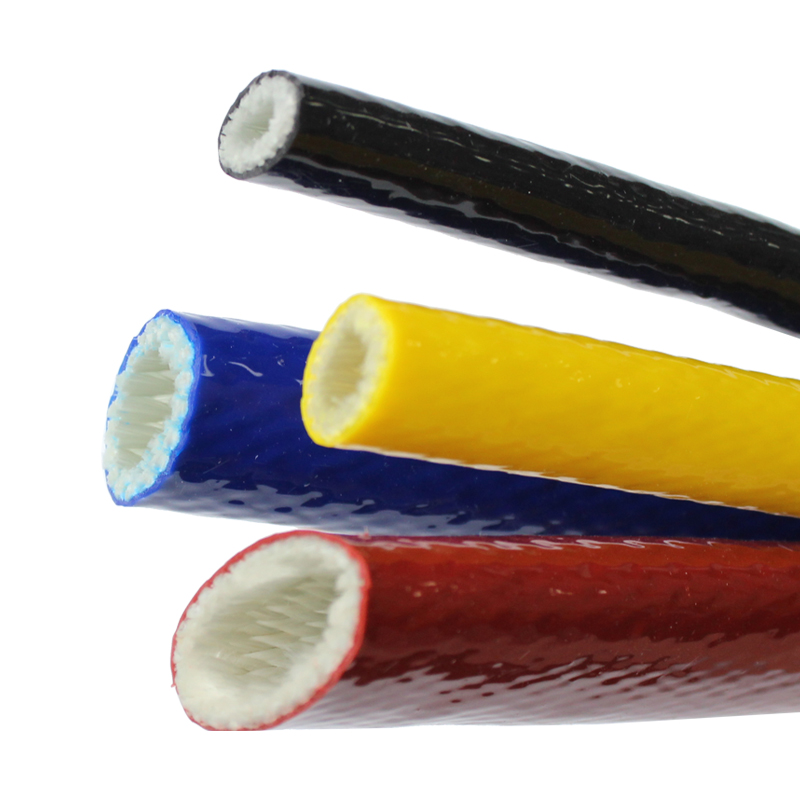
This category utilizes heavy braided fiberglass coated with a thick layer of iron-oxide red silicone rubber. The silicone fiberglass insulation sleeving sheds molten metal and resists direct flame through an ablative process. When exposed to extreme heat or molten splash, the silicone coating absorbs the thermal energy and forms a protective silica crust. This sacrificial layer prevents the underlying fiberglass from degrading while deflecting molten slag.
These sleeves are optimal for steel mills, foundries, glass manufacturing plants, and heavy welding environments. In these settings, molten splash and heavy slag present the primary threats. The thick silicone coating also provides excellent resistance to hydraulic fluids and lubricating oils. Maintenance teams can easily wipe away accumulated grime and slag from the smooth silicone surface. However, they are not ideal for high-friction environments without additional abrasion-resistant jacketing. Their continuous temperature limit typically caps at 500°F (260°C), though they can withstand splashes up to 3000°F (1650°C).
This solution features a fiberglass base laminated with a highly reflective aluminum foil layer. The aluminum foil fiberglass sleeving functions by bouncing away up to 95% of infrared radiation. Instead of absorbing heat like ablative materials, the foil reflects the radiant energy away from the protected cables.
You will find these sleeves primarily in engine compartments, exhaust systems, and areas near industrial furnaces. They excel where radiant heat is the primary threat, but direct flame or molten splash is absent. They are highly susceptible to conductive heat transfer. If the foil physically touches the heat source, it will rapidly transfer heat directly to the cable. Furthermore, the foil layer can delaminate or tear under heavy mechanical stress or continuous fluid exposure. We do not recommend foil-backed sleeves for applications involving heavy physical abrasion or dragging.
This category uses tightly woven meta-aramid fibers. The NOMEX braided sleeving offers exceptional tensile strength and flame resistance. It will not melt, drip, or support combustion when exposed to direct flame. It provides a lightweight, highly flexible barrier against abrasion and mechanical wear.
Engineers specify this material for aerospace, military, electric vehicle (EV) manufacturing, and transit applications. It protects against abrasion, flame, and gamma radiation without adding significant weight or bulk. The tight weave prevents dust and debris from penetrating the cable bundle. However, it has a lower maximum temperature threshold compared to heavy fiberglass or silica. It does not shed molten metal and offers minimal insulation against sustained high ambient heat. It is a mechanical barrier with flame-retardant properties, rather than a pure thermal insulator.
These uncoated, extreme-temperature woven fibers withstand continuous temperatures of 1800°F (982°C) and higher. They provide pure thermal insulation without relying on polymer coatings or reflective foils. The dense weave traps air, creating a highly effective thermal barrier against extreme ambient heat.
They are optimal for static, extreme-heat environments where flexibility and fluid resistance are secondary concerns. You will see them used inside industrial ovens, high-temperature exhaust manifolds, and power generation turbines. Because they lack a polymer coating, they are prone to fraying during installation. They also lack fluid and oil resistance. This absence of a coating makes them susceptible to wicking flammable liquids, which can create secondary fire hazards if the soaked sleeve is later exposed to an ignition source.
Material Type | Primary Threat Defended | Continuous Temp Limit | Peak Temp Limit | Fluid Resistance |
|---|---|---|---|---|
Silicone Fiberglass | Molten Splash / Direct Flame | 500°F (260°C) | 3000°F (1650°C) | Excellent |
Aluminum Foil Fiberglass | Radiant Heat (Infrared) | 400°F (204°C) | 1000°F (538°C) | Poor |
NOMEX Braided | Abrasion / Flame Spread | 428°F (220°C) | 600°F (316°C) | Moderate |
High-Purity Silica | Extreme Ambient Heat | 1800°F (982°C) | 3000°F (1650°C) | Poor (Wicks Fluids) |
Evaluating protective barriers requires looking beyond generic temperature ratings. You must analyze how the material interacts with the specific operational environment. This involves thermal profiling, assessing environmental resistance, and determining mechanical durability.
You must audit the operational environment using thermal imaging equipment. This determines the baseline ambient heat versus intermittent peak exposures. A facility might have an ambient temperature of 300°F (149°C), but experience brief flashes of 2000°F (1093°C) during a molten metal pour. The selected material must handle both conditions without degrading.
Consider the concept of thermal bridging. You must ensure the sleeve thickness provides sufficient insulation value to protect the underlying cable jacket. Thin materials might resist catching fire, but they will still transfer heat rapidly to the internal components. The insulation must delay heat transfer long enough for the peak exposure to pass. We measure this delay in minutes. If a robotic welding arm experiences a 30-second blast of direct flame, the internal temperature of the sleeve must remain below 200°F (93°C) for that entire duration.
You must evaluate sleeves not just for equipment protection, but for Environmental Health and Safety (EHS) compliance. Exposed hot hoses and cables present severe burn hazards to personnel. Proper insulation mitigates this risk by keeping external surfaces cool.
Calculate the required wall thickness to drop external surface temperatures below the human burn threshold. For brief contact, this threshold is typically 140°F (60°C). Thick fiberglass walls trap air and drastically reduce the external touch temperature, ensuring worker safety in cramped industrial spaces. In steam line applications, a heavy-walled fiberglass sleeve can reduce a 400°F (204°C) internal temperature to a safe 120°F (49°C) external touch temperature.
Industrial environments expose cables to hydraulic fluids, lubricating oils, aggressive solvents, and moisture. You must evaluate the threat level of these contaminants. Uncoated braided sleeves fail rapidly in fluid-heavy environments due to the wicking effect. The porous fibers draw in flammable liquids through capillary action, saturating the entire length of the sleeve.
If a hot slag hits a fluid-soaked uncoated braid, it will ignite instantly. Silicone-coated options are mandatory for fluid deflection. The solid polymer barrier prevents fluid ingress, eliminating the wicking hazard and preventing secondary fires. It also allows maintenance teams to easily wipe away accumulated grime. We always specify silicone-coated fiberglass for hydraulic lines near ignition sources for this exact reason.
Cables in constant motion require high abrasion resistance. Robotics, drag chains, and automated welding arms subject cables to millions of flex cycles. The protective barrier must withstand this continuous friction without fraying or tearing. A torn sleeve offers zero thermal protection.
Evaluate the bend radius impact. Ensure the sleeve does not restrict cable movement, kink, or crack under repeated flexing. Heavy silicone coatings can stiffen in cold environments, while tightly woven aramids maintain flexibility across a wide temperature range. Match the mechanical properties of the sleeve to the dynamic requirements of the equipment. If the cable drags across a concrete floor, you need a sleeve with a high denier count and a thick outer extrusion.
Proper sizing and installation dictate the long-term success of any thermal barrier. Even the highest-rated fireproof sleeve for cables will fail if installed incorrectly. You must account for thermal expansion, installation constraints, and ongoing maintenance requirements.
Follow a strict rule of thumb for sizing. Allow 10-15% clearance over the maximum outer diameter of the cable or hose bundle. You must measure the widest point, which often includes bulky connectors or hydraulic fittings. This clearance allows for thermal expansion and eases the installation process.
Measure the outer diameter of the bare cable using digital calipers.
Measure the outer diameter of the largest connector or fitting that must pass through the sleeve.
Take the larger of the two measurements.
Multiply that measurement by 1.15 to calculate the required Inner Diameter (ID).
Round up to the nearest standard fractional or metric size available from the manufacturer.
This clearance creates a critical insulating air gap between the sleeve and the cable. Undersizing restricts flexibility and causes thermal bridging, transferring heat directly to the cable. Oversizing leads to the pooling of fluids, creates snagging hazards on moving machinery, and adds excessive bulk to the assembly.
Seamless tubular sleeves offer uninterrupted 360-degree protection. They are best for new assemblies or during major equipment overhauls. However, installing them requires disconnecting lines, which introduces fluid bleeding and system purging requirements. This process consumes significant labor hours.
Split or hook-and-loop sleeves are essential for retrofitting existing, continuous operations. They allow technicians to wrap the protection around cables without disconnecting lines. You must mitigate the thermal vulnerability at the closure seam. Orient the seam away from the primary heat source. Ensure the closure material, such as Nomex thread or brass snaps, matches the thermal rating of the base material. If the heat source is directly below the cable, rotate the sleeve so the hook-and-loop closure faces the ceiling.
You must seal the sleeve ends properly. Use high-temperature self-fusing silicone tape or stainless steel zip ties at the termination points. Leaving ends open allows hydraulic fluid and moisture to penetrate the fiberglass base.
Proper end sealing prevents fluid ingress, stops fiber fraying, and eliminates thermal wicking. It locks the sleeve in place, preventing it from sliding down vertical cable runs under heavy vibration. Wrap the silicone tape tightly, overlapping each pass by 50%, starting on the bare cable and working up onto the sleeve. This creates a watertight, thermally resistant seal.
Establish a strict preventative maintenance schedule. Thermal barriers are consumable items in harsh environments. They absorb damage to protect the vital infrastructure beneath them. Regular visual inspections are mandatory to identify end-of-life degradation.
Look for specific visual cues for replacement. Chalking or flaking of silicone coatings indicates severe thermal degradation. Delamination of aluminum foil destroys its reflective properties. Exposed underlying fiberglass means the primary protective barrier has failed. Replace the sleeve immediately if you observe any of these indicators or if it has absorbed flammable fluids through a physical tear. Do not attempt to patch a heavily degraded sleeve; replace the entire section.
Procuring thermal protection requires strict adherence to industry standards. Relying on unverified materials introduces unacceptable operational risk and liability. You must thoroughly vet your supply chain to ensure consistent quality and performance.
Evaluate materials against recognized global standards. Look for compliance with UL 1441 for flammability, RoHS for hazardous substances, and REACH for chemical safety. Specific industries require vertical standards. Mining operations demand MSHA approval for flame resistance. Aerospace applications require SAE standards, while the rail industry relies on DIN EN 45545-2 for fire behavior.
Relying on self-certified or unverified testing data is dangerous. Independent laboratory testing ensures the material performs exactly as specified under controlled conditions. Demand official documentation to verify all thermal and mechanical claims. If a manufacturer cannot produce a third-party test report for their stated temperature ratings, find another source.
Partnering with a reputable industrial fireproof sleeving supplier guarantees material consistency. Demand comprehensive quality assurance documentation. Request batch testing reports, material traceability records, and proof of ISO 9001 certification. This ensures every spool meets the exact specifications of the initial prototype.
Prioritize suppliers willing to provide technical data sheets and physical sample lengths. You must conduct in-situ testing before a facility-wide rollout. Real-world environmental testing reveals vulnerabilities that laboratory data might miss. Assess their customization capabilities. A strong partner can provide custom IDs, specific cut lengths, specialized colors for line identification, and unique closure mechanisms for non-standard applications. Evaluate their supply chain reliability. Consistent lead times, inventory stability, and responsive engineering support are critical during the specification phase.
Audit your facility's high-temperature zones using thermal imaging to map radiant, convective, and conductive heat sources accurately.
Calculate the required inner diameters by measuring the widest cable fittings and adding a 15% expansion gap to ensure a proper insulating air layer.
Request technical data sheets and physical material samples for in-situ environmental testing on your specific machinery.
Verify supplier certifications and request batch testing reports before approving facility-wide rollouts.
A: Heat shrink is primarily for electrical insulation and environmental sealing at low-to-moderate temperatures. It conforms tightly to the cable. A fireproof sleeve provides extreme thermal barriers and molten splash protection without shrinking. It maintains a critical air gap for insulation.
A: Measure the widest part of the cable, hose, or bundle, including any bulky fittings. Add 10-15% to the Inner Diameter. This ensures flexibility, eases installation, and provides a critical insulating air gap between the sleeve and the cable.
A: No. Foil is designed specifically to reflect radiant heat. Direct flame or molten splash will quickly melt or degrade the foil layer. This compromises the fiberglass base and exposes the underlying cable to catastrophic thermal damage.
A: Yes. The thick, extruded silicone coating is highly resistant to hydraulic fluids, lubricating oils, and water. This prevents the dangerous wicking effect common in uncoated braids, which can turn a fluid-soaked sleeve into a severe fire hazard.
A: For existing lines that cannot be disconnected, use split sleeves. These are equipped with high-temperature hook-and-loop fasteners, metal snaps, or zipper closures. This allows technicians to wrap the protection around the cables in place, preventing operational downtime.
A: It is ideal for applications requiring extreme flexibility, high tensile strength, abrasion resistance, and flame retardancy without heavy bulk. Engineers heavily utilize it in aerospace, military, transit, and robotics applications where weight and flexibility are critical.
A: Replace the sleeve if you observe the silicone coating flaking or turning chalky. Look for aluminum foil delamination or exposed underlying fiberglass. Also, replace it immediately if the sleeve has absorbed significant amounts of flammable fluids through a physical tear.